




BERA Test
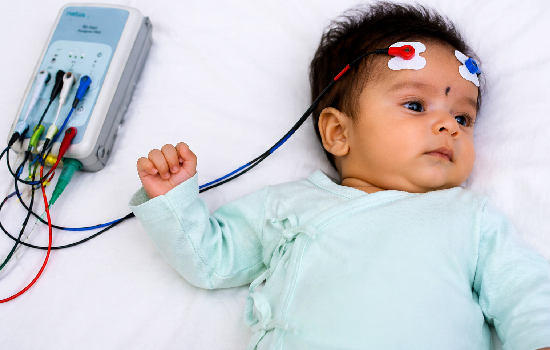
BERA Test (Brainstem Evoked Response Audiometry)
The BERA Test (Brainstem Evoked Response Audiometry) is an advanced and non-invasive hearing diagnostic test used to evaluate how sound signals travel from the ear to the brainstem. It is one of the most reliable tests for detecting hearing loss in newborns, infants, young children, and patients who cannot respond to routine hearing tests. The test records electrical activity generated by the auditory nerve and brainstem when sound stimuli are played through earphones.
At our hearing and audiology center, we perform the BERA test using modern diagnostic equipment under the supervision of experienced audiologists. This test is highly effective in identifying hearing impairment, auditory neuropathy, delayed speech due to hearing issues, and nerve-related hearing disorders.
How the BERA Test Works
During the procedure, small electrodes are gently placed on the forehead and behind the ears. Soft clicking sounds are delivered through earphones, and the machine records the brain’s response to these sounds. Since the test does not require active participation, it is ideal for babies and sleeping children. The process is painless, safe, and usually completed in 30–60 minutes.
Benefits of BERA Test
- Early detection of hearing loss
- Suitable for infants and children
- Safe and painless procedure
- Accurate nerve pathway assessment
- Helps in speech delay diagnosis
- Useful for hearing aid planning
- Supports early intervention treatment
FAQ – BERA Test
BERA stands for Brainstem Evoked Response Audiometry, a hearing test that checks how the auditory nerve and brainstem respond to sound.
Yes, the BERA test is completely safe, painless, and specially designed for babies and infants.
The test usually takes around 30 to 60 minutes, depending on the child’s sleep condition and cooperation.
For very active babies or small children, mild sedation may sometimes be suggested so the child remains asleep for accurate results.
BERA helps detect hidden hearing loss that may be causing delayed speech and language development.