




VNG Test
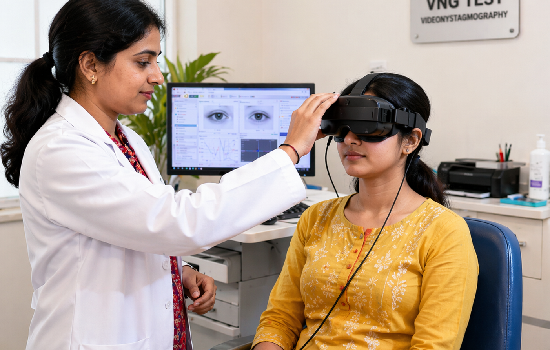
VNG Test in Pitampura | Videonystagmography & Balance Testing
Optical Plaza provides the VNG Test (Videonystagmography) is a sophisticated diagnostic procedure used to assess vertigo, dizziness, imbalance, and other vestibular disorders. The VNG test in Pitampura evaluates the connection between the inner ear and the brain, focusing on involuntary eye movements known as nystagmus.
By utilizing cutting-edge infrared goggles, this procedure examines the eyes’ response to various stimuli, helping specialists identify the root causes of conditions such as benign paroxysmal positional vertigo (BPPV) and vestibular neuritis.
When Should You Consider a VNG Test?
Dizziness or vertigo can happen for many reasons, and it is not always easy to understand what is causing it. A VNG Test in Pitampura may be recommended when these symptoms occur repeatedly or interfere with your daily activities.
You may benefit from a VNG evaluation if you experience:
- Frequent dizziness or spinning sensations
- Problems with balance or walking
- Feeling lightheaded without an obvious reason
- Nausea or discomfort associated with vertigo
- Repeated episodes of unsteadiness
- Symptoms that may be related to an inner-ear problem
- Difficulty maintaining balance while moving or changing positions
A VNG test records specific eye movements to provide useful information about the vestibular system. The results can help the specialist understand whether your symptoms may be related to the inner ear or balance system and decide what further evaluation or treatment may be appropriate.
How the VNG Test Works
During the procedure, the patient wears special video goggles that track eye movements. The test is usually divided into three parts:
- Oculomotor Testing – Checks eye tracking and visual response
- Positional Testing – Evaluates dizziness caused by head movements
- Caloric Testing – Warm and cool air or water is used to stimulate each ear individually
The complete test is safe, non-invasive, and usually takes 45–60 minutes. A VNG test in Pitampura provides detailed information about the functioning of the vestibular system and helps specialists determine the appropriate treatment plan.
Benefits of VNG Test
- Accurate diagnosis of the causes of vertigo and dizziness
- Tests for inner ear balance function
- Can determine which ear is affected
- Is safe, painless, and noninvasive
- Can help guide treatment of your dizziness
- Can be used to assess risk of falls
Conclusion
Discomfort and imbalance, along with a variety of other sensations such as dizziness or vertigo, can disrupt your day and should not be left uninvestigated when recurring. Book your VNG Test at Pitampura can provide answers related to the vestibular system and explain the causes of such uncomfortable sensations.
This examination at Optical Plaza uses state-of-the-art technology to ensure a high degree of patient comfort and safety. If you feel like you have been experiencing dizziness or difficulties with balance, a VNG evaluation can help you take the next step towards feeling better.
A VNG Test (Videonystagmography) evaluates eye movements and helps assess the inner ear and balance system. VNG Test in Pitampura is commonly recommended for dizziness and vertigo.
A VNG Test may be recommended for people experiencing vertigo, dizziness, imbalance, lightheadedness, or spinning sensations.
No. A VNG Test is generally safe, painless, and non-invasive. Some parts may temporarily cause dizziness.
A VNG Test usually takes around 60 to 90 minutes, depending on the assessments required.
Preparation may include avoiding certain foods, drinks, or medications. Follow the instructions provided by your audiologist before the test.